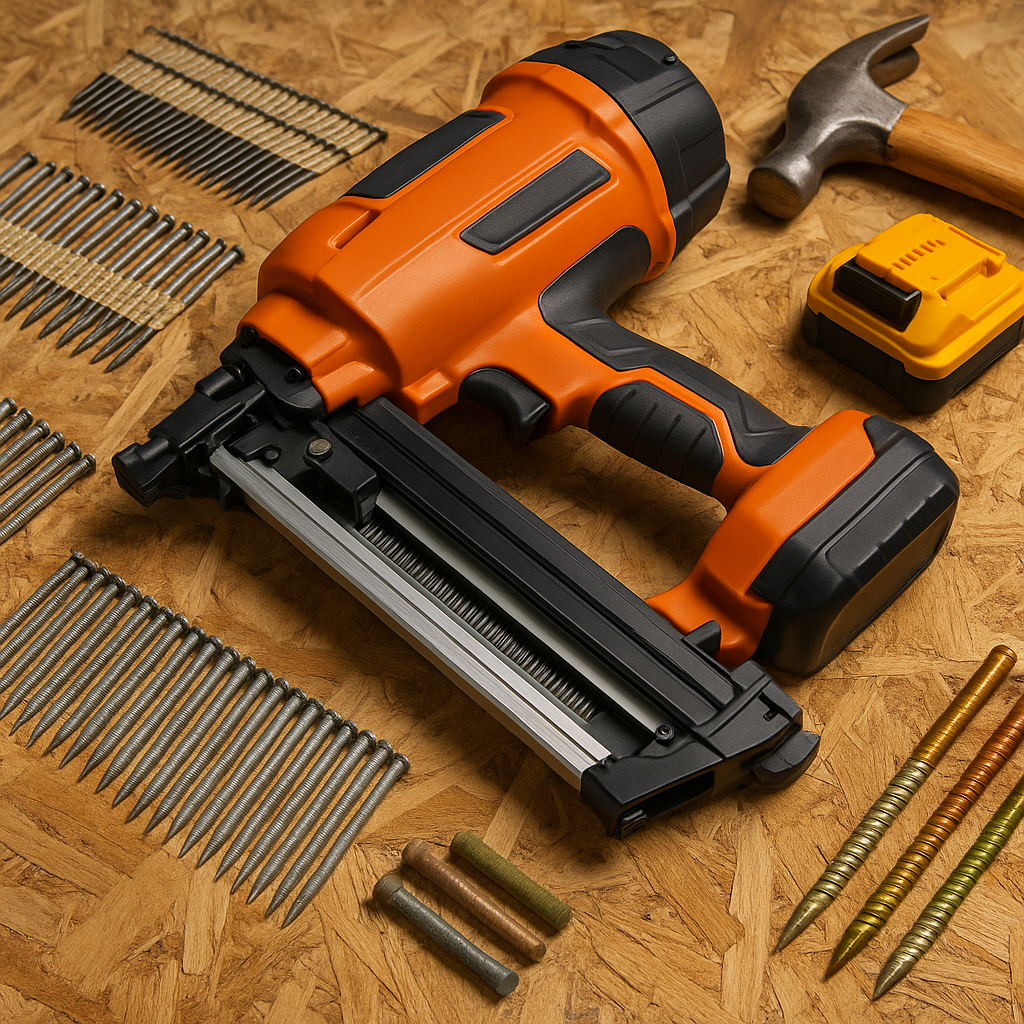


For woodworking, home improvement, and maybe even construction projects, the most important thing is choosing the right tool for the specific type of work that needs to be done. Out of all the equipment that you will come across, two common tools in the category of nail guns are the brad nailer and finish nailer; however, even while the two may seem similar, they actually have completely different purposes that one would use for a task over the other. Knowing the difference will therefore help you make a sound decision about what nailer you require for the next upcoming task.
Brad Nailer: Definition
A brad nailer is a pneumatic nail gun device that drives small nails, known as brads, into wood and other materials. These nails are thinner and smaller than standard finishing nails so that they usually measure around 18-gauge in size. This is why brad nailers are best suited for light duty works like attaching trim or moulding or lighter craft, such as cabinet-making. In general terms, brad nails have lesser holding strength than their thicker alternatives, but smaller size puts them right at home in projects in which one does not want to leave a large hole or is concerned about splitting the wood.
One of the better attributes of a brad nailer is its versatility because it can be used for light attachment of mouldings and trim without any damage to the material. Somewhat more concealment than other fasteners and brads are, therefore, ideal for projects that you want done without visible fasteners.
Finish Nailer: What is it?
The finish nailer, on the other hand, nailing huge and heavy nails, maybe 15 or 16-gauge. Finish nails are larger and tend to provide a stronger, more secure hold than brads. That is, therefore, more suitable for using for the heaviest applications, such as ponds or baseboards, as well as door and window casings. Finish nailers, in contrast, are the right ones for using on large, thick wood pieces or projects that need quite a firmer hold.
Its larger nails lend to the finish nailer making it capable of working on tasks wanting more structural integrity or for materials that will be moving over time even though it also incurs a drawback: it will probably leave noticeable holes requiring filling, which can be a drawback if aesthetics for your project is important.
Key Differences Between Brad and Finish Nailers
Nail Size:
- Brad Nailer: Uses smaller, thinner nails (18-gauge).
- Finish Nailer: Uses thicker, stronger nails (15- or 16-gauge).
Holding Power:
- Brad Nailer: Effectively for lightweight materials, very low holding power for heavier material.
- Finish Nailer: It provides the stronger hold required for larger wood pieces.
Application:
- Brad Nailer: Most appropriate for fine trim work with mouldings and craft projects.
- Finish Nailer: Most suitable for baseboards, door- and window casings, and heavier trims.
Appearance of Nail Holes:
- Brad Nailer: Holes, which are tiny and not so visible, are scarcely left behind.
- Finish Nailer: Holes are simply larger and considerably more obvious and will need to be filled for that smooth exterior.
Risk of Splitting:
- Brad Nailer: Very seldom splinter wood as brads are thinner.
- Finish Nailer: Splitting wood is more likely to happen when nailing it with a finish nail, especially thin or soft wood.
Which One Do You Need?
Choosing between brad or finish nailers comes down to the requirements that you have for your project. For attaching light delicate trims or moulds that do not require much holding power, best tool will be brad nailer. Works wonderfully for detailed applications such as cabinetry, picture frames, etc., or attaching light trims to drywall without the risk of damage.
The finish nailer is the right tool if you’re dealing with heavier wood or want something with a stronger hold. It’s ideal to use for baseboards, crown mouldings, or casing around doors and windows, where all the holding power is really going to come in. But be ready to putty holes for a cleaner, more polished finish.
Conclusion
The main difference between a brad and finish nailer is their nail size, as well as their holding strength and ideal materials. For lightweight projects requiring an unobtrusive end result, the brad nailer is your best bet. For larger jobs that require a strong grip, opt for the finish nailer. Know these differences, and you will be sure to have the right tool for the job, ensuring a professional finish in your DIY or woodworking project.